
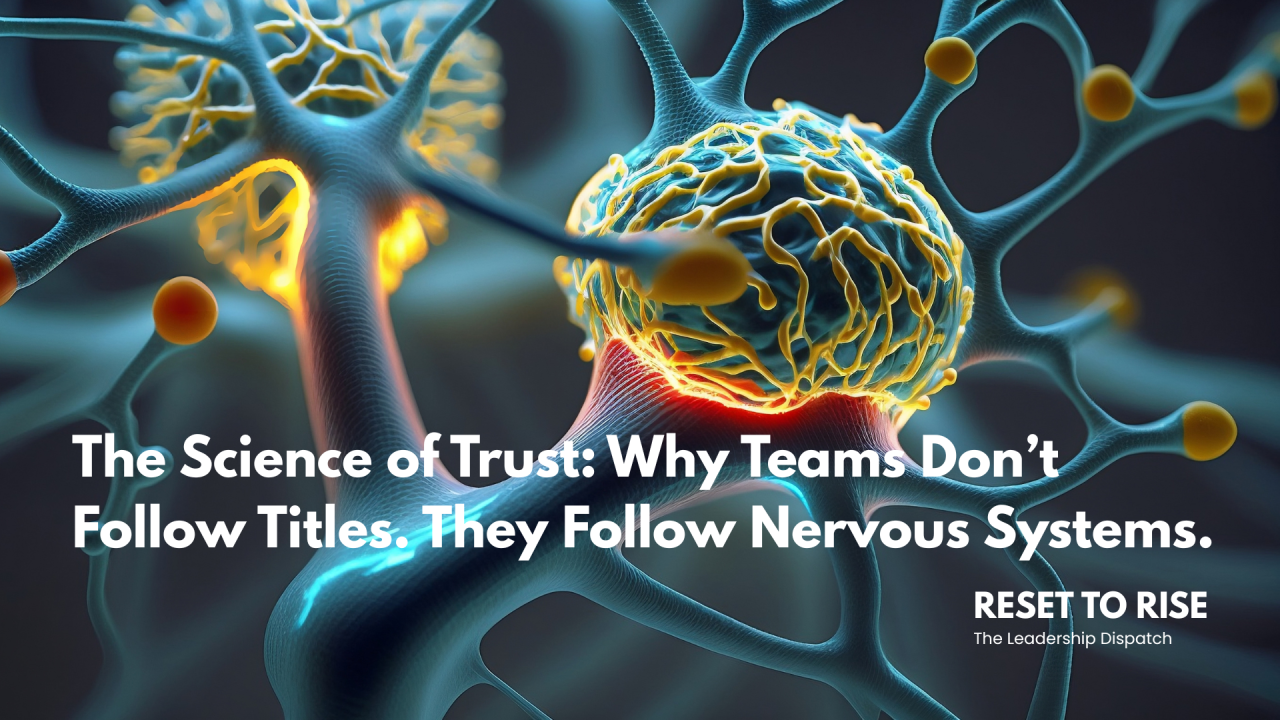
The Science of Trust: Why Teams Don’t Follow Titles. They Follow Nervous Systems.
Every leader I’ve ever coached talks about trust. They want their teams to open up, speak honestly, collaborate more, take initiative.
But most still treat trust as a communication skill something you say better, frame better, or explain better. The truth is, trust doesn’t start with language. It starts with the nervous system.
The moment you walk into a room, before you speak a single word, your body has already begun leading. Your breath, tone, and presence are sending signals cues of safety or cues of threat. Everyone else’s nervous system is reading those signals instantly, subconsciously, and deciding whether to open up or shut down.
That’s not philosophy. That’s neuroscience.
What the Science Says
Trust is not built cognitively. It’s co-regulated between nervous systems.
When a leader’s nervous system is steady, calm, and coherent, it sends out micro-signals- slower speech rhythm, stable facial muscles, warm tone that the body reads as safe. The other person’s nervous system mirrors that calm through limbic resonance – the brain’s natural capacity to sync emotional states.
In that moment, oxytocin (the bonding hormone) rises and cortisol (the stress hormone) drops. This shift opens access to the prefrontal cortex -the brain’s center for problem-solving, empathy, and creativity.
In simple terms: When you are regulated, your team can think. When you are dysregulated, your team is just trying to survive you.
When Safety Is Missing
Most leaders underestimate how often they signal threat without realizing it.
- A clipped tone after a stressful meeting.
- A distracted glance at your phone mid-conversation.
- A defensive explanation when feedback hits a nerve.
Each of these sends the same unconscious message: it’s not safe here.
And once safety is gone, even high-performing teams begin to protect themselves instead of collaborating. They overthink, under-communicate, and avoid risk. Performance doesn’t collapse overnight it quietly erodes.
What Real Trust Looks Like
- Regulate before you respond. When something triggers you, breathe before you speak. A three-second pause resets your vagus nerve and changes the energy in the room.
- Consistency over charisma. The brain trusts predictability. A steady tone, stable behavior, and emotional consistency matter far more than motivation speeches.
- Transparency with containment. Admitting uncertainty with groundedness : “I don’t have all the answers, but here’s what we know and what we’ll do next” builds trust without chaos.
- Curiosity instead of control. Asking “What do you think we might be missing?” activates the other person’s prefrontal cortex, signaling that it’s safe to contribute.
- Somatic awareness. Notice your own body cues. Are your shoulders tense? Is your jaw clenched? Is your breath shallow? The body always broadcasts before the mouth does.
The Leadership Reframe
Leaders often think trust is earned through expertise. But neuroscience shows it’s earned through emotional regulation.
Your people don’t follow titles. They follow signals. And they can feel everything you try to hide.
Leadership today is not just about clarity of direction it’s about coherence of presence. The ability to remain grounded when things are uncertain. To stay connected when others are reactive. To make calm contagious.
That is the new edge of executive presence. Not charisma. Not authority. Coherence.
Because the safest nervous system in the room becomes the most trusted one.
Inside Reset to Rise, this is the real work. Helping high-achieving women redefine what powerful leadership feels like from the inside out.