
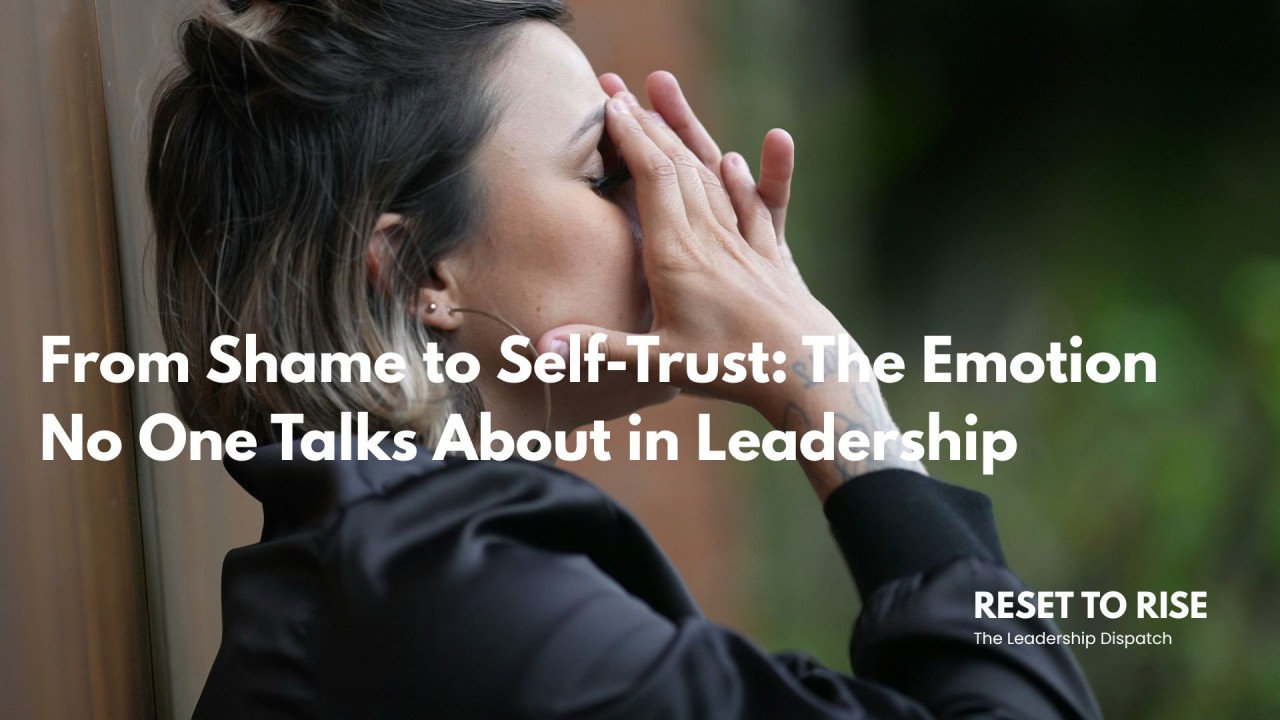
From Shame to Self-Trust: The Emotion No One Talks About in Leadership
There’s a moment in almost every coaching journey where a deeper truth surfaces.
A high-performing woman, in a leadership role or on the edge of one, says something like:
- “I hate how much I overthink every email.”
- “I replay meetings wondering if I said too much or too little.”
- “I carry the weight of every mistake far longer than I should.”
These aren’t simply confidence issues or perfectionism habits. Underneath them, there is often something much heavier: Shame.
And we don’t talk about it enough.
Shame in Leadership Doesn’t Always Look Loud
Shame is quiet. It doesn’t always show up as guilt or self-blame. Sometimes it looks like:
- Over-apologising, even when you’ve done nothing wrong
- Keeping your ideas to yourself, even when they’re valuable
- Avoiding stretch roles because visibility feels unsafe
- Struggling to receive feedback without internal collapse
- Staying in roles or relationships that no longer serve you, because leaving feels like failure
These behaviours are common among high-achieving women. And they don’t happen because they’re unsure of their skills. They happen because they’ve internalised the belief that they have to work harder just to be seen as enough.
What the Brain Does With Shame
Shame is more than an emotion. It is a neurobiological experience.
When you feel shame, the amygdala—your brain’s fear centre—activates as if you’re under threat. This sets off the stress response: racing heart, shallow breath, tunnel vision. The prefrontal cortex, which governs executive functioning and clear decision-making, becomes less active.
This is why you can’t think clearly when you’re ashamed. This is why feedback feels like an attack. This is why you replay that one comment in the meeting for hours after it’s over.
Shame reduces your leadership presence. Not because you lack potential, but because your brain is trying to keep you safe by shrinking your visibility.
The Gendered Layer of Shame
Many women are socialised to associate success with being liked, agreeable, and emotionally available.
So when they:
- Assert themselves
- Set boundaries
- Get promoted
- Say no
- Take up space
They often carry shame around how it’s received.
Not because they’re unsure of their value, but because they’ve been trained to believe that value must always come wrapped in likability.
This internal tug-of-war isn’t about confidence. It’s about identity.
From Shame to Self-Trust: What the Shift Looks Like
The opposite of shame isn’t pride. It’s self-trust.
Here’s what that shift looks like over time:
- You stop over-explaining your decisions
- You speak from clarity, not from fear of how others might receive it
- You give yourself permission to get it wrong and still belong
- You lead with boundaries and compassion—not guilt and over-functioning
- You begin to trust that your presence is enough, even in silence
This is the kind of work we do in Reset to Rise. Not just behaviour change, but belief change. Not just communication coaching, but nervous system rewiring.
Because leadership presence isn’t built through performance. It’s built through regulation, repair, and return to self.
What Helps
Here are three coaching and neuroscience-backed shifts I often guide clients through:
1. Name It Without Judging It
When you feel the shame spiral begin, acknowledge it with compassion: “I feel exposed” or “This feels like a threat to my belonging.” Naming the emotion reduces amygdala activity and brings your prefrontal cortex back online.
2. Pause Before You Perform
Notice the urge to over-apologise, over-justify, or over-function. Take a breath. Ask, “Is this coming from fear or alignment?” Even a 10-second pause begins to rewire your automatic response.
3. Redefine What Makes You Worthy
Your worth is not in how well you’re received. It’s in how honestly you show up. Repetition of this truth creates new neural associations—ones rooted in internal safety, not external approval.
Leadership Takeaway
Shame thrives in silence. Self-trust grows in spaces where you are allowed to take up space-flaws, voice, edges and all.
You don’t need to be harder on yourself to be taken seriously. You need to be kinder to yourself to lead with clarity.
Your authority doesn’t come from perfection. It comes from the courage to be visible, even when you feel vulnerable.
Your Restet Starts Here
If you’re navigating the inner tension of wanting to lead more boldly, but often find yourself shrinking out of shame—this is your invitation to pause.
You are not too sensitive. You are not too much. You are not behind.
You are just in the middle of shedding a version of leadership that was never built for you.
Subscribe to Reset to Rise: The Leadership Dispatch for weekly coaching insights, neuroscience tools, and real conversations about the inner work behind sustainable leadership.
Because the real shift happens not when others trust you—but when you do.